All India Trade Union Congress

Serving the Working Class of India Since 1920

Learn More

About AITUC

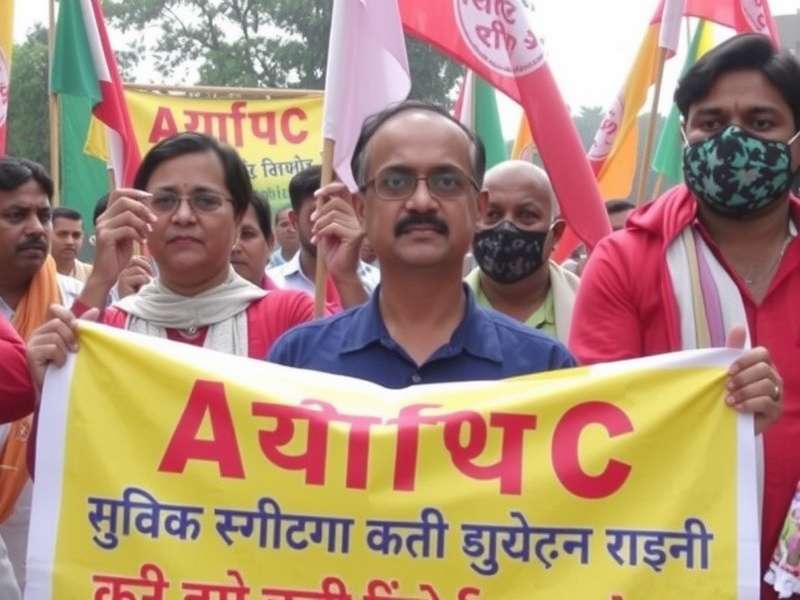
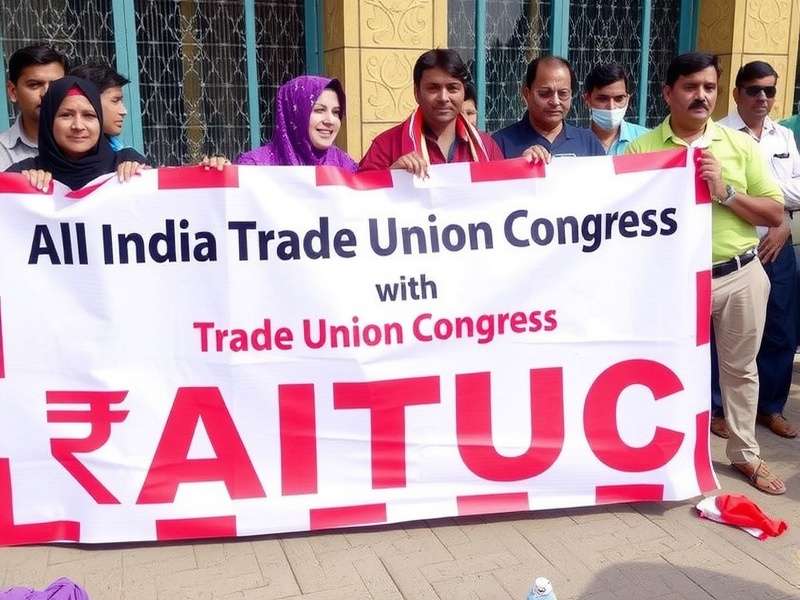
AITUC members discussing workers' rights

The All India Trade Union Congress (AITUC) is the oldest and one of the largest trade union federations in India. Established in 1920, AITUC has been at the forefront of the labor movement, championing the rights of workers across various sectors including manufacturing, agriculture, services, and public sector enterprises. With its headquarters in New Delhi, AITUC operates through a network of state committees and affiliated unions, representing millions of workers nationwide.

Our mission is to secure fair wages, safe working conditions, social security, and dignity for every worker. AITUC advocates for policies that promote economic justice, gender equality, and sustainable development. We engage in collective bargaining, legal advocacy, and mass mobilization to address the challenges faced by the working class in a rapidly changing economy.

AITUC is affiliated with the World Federation of Trade Unions (WFTU) and maintains fraternal relations with trade unions globally. We believe in international solidarity and collaborate with labor organizations worldwide to advance common goals. The organization is structured democratically, with decisions made through elected bodies at local, state, and national levels.

Over the decades, AITUC has played a pivotal role in shaping labor legislation in India, including the Industrial Disputes Act, the Minimum Wages Act, and the Employees' State Insurance Act. We continue to campaign for the implementation and strengthening of these laws to protect workers from exploitation and ensure their well-being.

The current leadership of AITUC comprises seasoned trade unionists with decades of experience in labor activism. The General Secretary, Mr. Amarjeet Kaur, leads the organization with a vision of inclusive growth and workers' empowerment. AITUC regularly conducts training programs, workshops, and seminars to educate workers about their rights and build leadership among the rank and file.

In addition to traditional union activities, AITUC has embraced digital tools to enhance outreach and support. Our website and mobile app provide resources on labor laws, grievance redressal mechanisms, and updates on ongoing campaigns. We also run helplines for legal aid and counseling services for workers in distress.

AITUC is committed to addressing emerging issues such as gig economy workers, climate change impacts on labor, and technological displacement. We advocate for just transition policies that safeguard jobs while promoting environmental sustainability. The organization also focuses on informal sector workers, who constitute a large part of India's workforce but often lack legal protection.

As part of our social responsibility, AITUC runs charitable initiatives like health camps, educational scholarships for workers' children, and disaster relief efforts. We believe that a strong labor movement is essential for a just and equitable society, and we invite all workers to join us in this struggle for a better future.

Our History

The All India Trade Union Congress was founded on October 31, 1920, in Bombay (now Mumbai) under the leadership of Lala Lajpat Rai, Joseph Baptista, and Diwan Chaman Lall. The inaugural session was attended by representatives from 64 unions, marking the beginning of organized labor movement in India. The formation of AITUC was inspired by the need to unify scattered trade unions and amplify workers' voices during the British colonial era.

In its early years, AITUC focused on combating exploitative practices like long working hours, low wages, and unsafe conditions prevalent in factories and plantations. The organization quickly gained momentum, with membership growing to over 100,000 by 1925. AITUC played a significant role in the 1928 Bombay textile strike and the 1929 railway workers' agitation, which highlighted the power of collective action.

During the independence movement, AITUC aligned with the Indian National Congress and other progressive forces to demand not only workers' rights but also national sovereignty. Many AITUC leaders were imprisoned for their anti-colonial activities. Post-independence, AITUC contributed to the drafting of the Indian Constitution, ensuring that labor rights were enshrined as fundamental principles.

The 1950s and 60s saw AITUC expanding its reach to new industries such as coal mining, steel production, and transportation. The federation advocated for the nationalization of key sectors and the establishment of public sector enterprises to generate employment and promote self-reliance. AITUC's efforts led to the creation of the Employees' Provident Fund and the introduction of pension schemes for workers.

In the 1970s, AITUC faced internal debates over ideological orientation, resulting in some factions splitting to form other unions. Despite this, AITUC remained a major force, especially in states like West Bengal, Kerala, and Tamil Nadu. The organization adapted to economic liberalization in the 1990s by focusing on contract workers, privatization challenges, and globalization impacts.

The 21st century has seen AITUC embrace digital activism and global solidarity. We have organized nationwide strikes involving millions of workers to protest against anti-labor policies, such as the 2020 general strike. AITUC continues to be a vocal critic of neoliberal reforms that undermine job security and workers' welfare.

Today, AITUC stands as a testament to the resilience of the labor movement. Our archives preserve historical documents, photographs, and oral histories that chronicle the struggles and achievements of Indian workers. We honor past leaders like S.A. Dange, Dr. S. Ramanathan, and Vimal Ranadive, whose contributions shaped the organization.

Looking ahead, AITUC is committed to revitalizing the trade union movement by engaging younger workers, promoting gender parity in leadership, and leveraging technology for advocacy. We believe that understanding our history is crucial for building a stronger future, and we encourage members to study the legacy of AITUC as a source of inspiration.

Historical meeting of AITUC in 1920
Founding Era (1920s)

The inaugural session in Bombay set the stage for nationwide labor mobilization, with demands for an eight-hour workday and abolition of child labor.

AITUC leaders during independence movement
Independence Struggle (1940s)

AITUC leaders actively participated in the Quit India Movement, linking workers' rights with national liberation.

Modern AITUC rally in New Delhi
Modern Era (2000s-Present)

AITUC organizes massive strikes and campaigns for gig workers, climate justice, and digital rights.

Activities & Events

AITUC engages in a wide range of activities to advance workers' interests. Our annual calendar includes conferences, training programs, protest marches, and cultural events. We also participate in tripartite meetings with government and employers to negotiate labor policies.

One of our flagship events is the National Convention of Workers, held every two years, where delegates from across India discuss strategies and set agendas. The convention features sessions on emerging issues like automation, gender-based violence at workplace, and migrant workers' rights.

AITUC regularly conducts legal literacy camps to educate workers about their entitlements under laws like the Factories Act, the Payment of Wages Act, and the Maternity Benefit Act. We have a team of lawyers who provide free legal assistance to members in cases of wrongful termination, wage theft, or occupational hazards.

In collaboration with academic institutions, AITUC runs research projects on labor market trends, wage disparities, and social security coverage. Our findings are published in reports and used for evidence-based advocacy. We also organize international solidarity visits to build networks with trade unions in other countries.

Cultural activities are an integral part of AITUC's work. We celebrate May Day (International Workers' Day) with rallies and cultural performances that highlight workers' contributions to society. Our drama troupes and folk artists create awareness about labor rights through street plays and songs.

AITUC is actively involved in disaster response, providing relief to workers affected by natural calamities like floods, cyclones, or the COVID-19 pandemic. We distribute food kits, medical supplies, and cash assistance to affected families, emphasizing solidarity in times of crisis.

Looking forward, AITUC plans to launch a digital platform for skill development, offering online courses in trades like welding, electrical work, and digital literacy. This initiative aims to enhance workers' employability in a competitive job market.

Legal Advocacy

AITUC files public interest litigations in courts to challenge anti-worker laws and practices. Our recent cases include petitions for minimum wage revision and against contractualization of permanent jobs.

Training Programs

We conduct workshops on collective bargaining, occupational safety, and leadership development for union representatives. These programs are held in regional languages to ensure accessibility.

Membership Information

Joining AITUC is open to all workers, regardless of industry, occupation, or employment status. We have categories for individual members, affiliated unions, and associate members (such as students and academics). Membership fees are nominal and based on income levels to ensure inclusivity.

Benefits of AITUC membership include access to legal aid, health insurance schemes, discounts on educational courses, and subscription to our monthly magazine "The Worker's Voice". Members can participate in decision-making through local unit meetings and elect delegates to higher bodies.

To join, visit our office or register online through our portal. You will receive a membership card that entitles you to services. AITUC also offers group membership for entire workplaces, where we help form unions and provide guidance on registration under the Trade Unions Act, 1926.

Our membership drive focuses on sectors with low unionization, such as IT, hospitality, and retail. We have special cells for women workers, young workers, and disabled workers to address their specific concerns. AITUC believes that a diverse membership strengthens the labor movement.

As of 2023, AITUC has over 3.5 million individual members and 450 affiliated unions, making it one of the largest trade union federations in India. We aim to double our membership by 2030 through targeted outreach and digital campaigns.

News & Updates

AITUC Leads Nationwide Strike for Minimum Wage Hike

November 15, 2023

On November 14, 2023, AITUC organized a 24-hour general strike across India, demanding an increase in the national floor-level minimum wage to ₹21,000 per month. The strike saw participation from over 50 million workers in sectors like manufacturing, transport, and agriculture. Protest rallies were held in major cities, with leaders submitting memorandums to government authorities. The strike highlighted the growing discontent over rising inflation and stagnant wages. AITUC General Secretary addressed the media, stating that the government must prioritize workers' welfare to sustain economic growth. The next round of talks with the Labor Ministry is scheduled for December.

The strike impacted production in several industrial belts, but was largely peaceful. AITUC provided legal support to workers facing disciplinary action for participating. International trade unions expressed solidarity through messages and social media campaigns. This action is part of a broader campaign that includes petitions, public hearings, and engagement with political parties. AITUC plans to intensify the struggle if demands are not met, possibly through indefinite strikes in key sectors.

Meanwhile, AITUC released a report detailing the inadequacy of current minimum wages in covering basic needs. The report compares wage levels across states and recommends a formula linking wages to consumer price indices. Economists have endorsed the findings, urging policymakers to reconsider wage policies. AITUC's research wing is now conducting surveys on household expenditure patterns to strengthen the case.

New Training Center Inaugurated in Kerala

October 30, 2023

AITUC inaugurated a state-of-the-art training center in Kochi, Kerala, on October 29, 2023. The facility, named after veteran leader P. Krishna Pillai, offers courses in labor laws, negotiation skills, and digital literacy. The inaugural session was attended by 200 union representatives from southern India. The center features a library, computer lab, and accommodation for trainees.

The training curriculum was developed in collaboration with the Indian Institute of Management Kozhikode and focuses on practical knowledge. AITUC plans to set up similar centers in other regions to build capacity among grassroots leaders. The Kochi center will also host seminars on emerging topics like platform economy and climate justice.

Funding for the center came from membership contributions and grants from international partners. AITUC emphasizes that education is key to empowering workers to assert their rights effectively. The next batch of training is scheduled for January 2024, with registrations open online.

AITUC Wins Landmark Case for Gig Workers

September 22, 2023

The Supreme Court of India, in a historic judgment, ruled in favor of AITUC's petition seeking social security benefits for gig workers. The court directed the government to frame schemes for provident fund, health insurance, and accident coverage for platform-based workers. AITUC had argued that these workers are employees under the law and deserve protection.

The case, which lasted two years, involved detailed submissions from labor experts and affected workers. The verdict is expected to benefit millions of delivery persons, ride-hailing drivers, and freelancers. AITUC's legal team celebrated the victory as a step towards recognizing new forms of work.

Following the judgment, AITUC is organizing awareness sessions for gig workers on how to claim benefits. We are also lobbying for amendments to existing laws to explicitly include platform workers. This win reinforces AITUC's commitment to adapting to changing labor landscapes.

Upcoming Events
  • Dec 10, 2023: Webinar on Gender Equality at Workplace
  • Jan 12, 2024: National Executive Committee Meeting, Delhi
  • Feb 14, 2024: Rally for Pension Rights, Parliament Street
  • Mar 8, 2024: International Women's Day Conference
Publications

AITUC publishes monthly magazines, research papers, and policy briefs. Recent titles include "State of Labor in India 2023" and "Guide to Collective Bargaining". These are available for download on our website.

Download Resources

Contact Us

Get in Touch

We welcome inquiries from workers, media, researchers, and the general public. Our office hours are Monday to Saturday, 9:00 AM to 6:00 PM IST.

  • Headquarters: AITUC Bhawan, 29 Talkatora Road, New Delhi - 110001, India
  • Phone: +91-11-23382456, +91-11-23382457
  • Fax: +91-11-23382458
  • Email: [email protected]
  • Website: www.sz-xkys.com
  • Registration: Trade Union Registration No. TU-1234/DEL/1920
  • License: Labor Organization License No. LO-56789/IN
Follow Us

Send a Message